
Will Road Salt Damage My Garage Floor? How to Protect It Through a Michigan Winter
Every Michigan winter, your tires drag road salt and brine straight into the garage — and bare concrete pays for it. Here's what salt actually does to a garage floor and how to protect it.
The short answer: Yes — road salt damages a bare or unsealed garage floor. Every winter, your tires carry salt and liquid brine into the garage, where it soaks into the concrete, feeds the freeze-thaw cycle, and leaves chalky white stains. Over a few Michigan winters, that shows up as pitting, flaking, and permanent discoloration. A properly sealed and coated floor stops it cold.
What road salt actually does to concrete
Bare concrete is porous — it drinks up whatever sits on it. Salt makes that worse in four ways:
- Moisture penetration. Salt is hygroscopic (it pulls in and holds water), so it keeps your slab wetter, longer.
- Freeze-thaw spalling. That trapped moisture freezes, expands, and thaws over and over. Each cycle pops small chips off the surface — this is why old garage floors flake.
- Efflorescence staining. The white, crusty residue salt leaves behind is nearly impossible to fully scrub out of raw concrete.
- Surface pitting. Years of chloride exposure eat at the top layer, leaving a rough, pockmarked floor.
Why Michigan garages are especially at risk
Metro Detroit roads get salted heavily all winter, and modern liquid brine clings to your tires and undercarriage far better than old rock salt. That means more salt, tracked in more often, sitting on your floor through every freeze. A bare slab doesn't stand a chance over time.
How to protect your garage floor
If your floor is bare concrete:
- Rinse or mop up salt and slush regularly — don't let brine pool for weeks.
- Put down mats or trays under where cars drip.
- Seal any cracks so moisture can't get underneath.
These help, but they're maintenance, not a fix. The real protection is a coating.
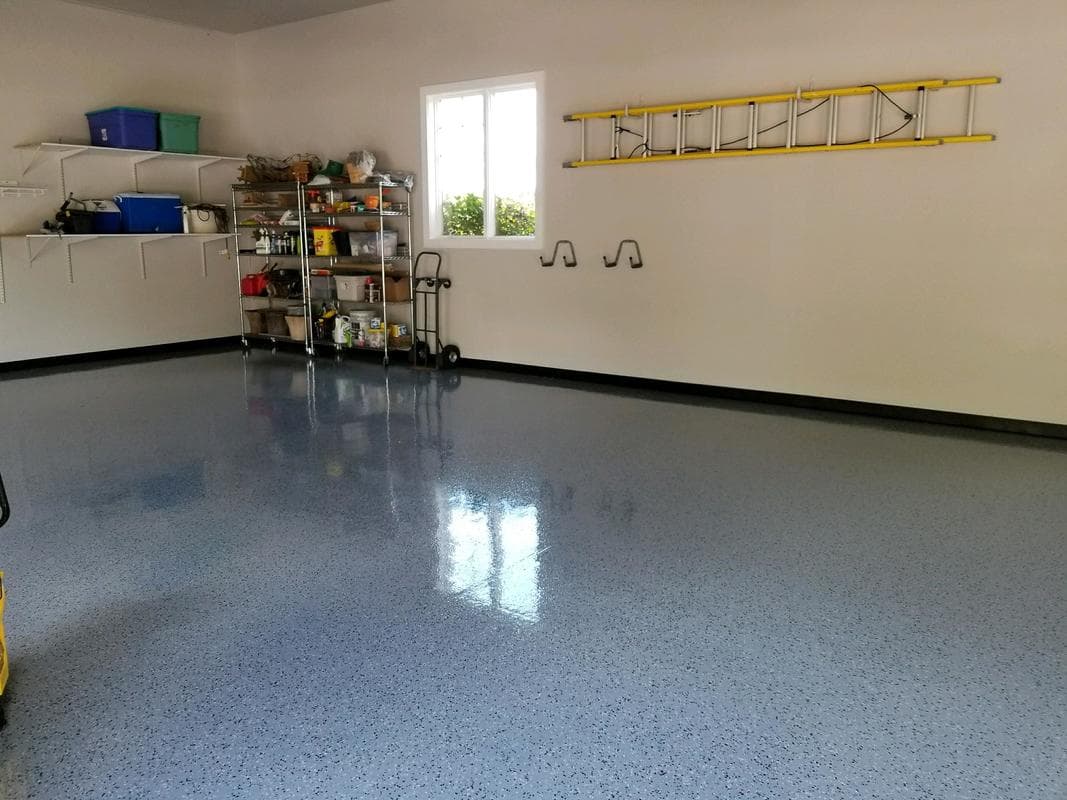
The permanent solution — a professional coating: A professional garage floor coating seals the concrete so salt and water can't penetrate at all. The surface becomes non-porous: salt sits on top, you wipe or rinse it away, and the concrete underneath stays protected. Polyaspartic coatings are especially good here — they're built to resist salt, chemicals, and UV, which is exactly what a Michigan winter throws at your floor.
Caring for a coated floor in winter
Even a coated floor lasts longest with a little care:
- Rinse off heavy salt buildup so it doesn't sit for months.
- Squeegee or mop standing brine near the door.
- That's really it — a sealed floor makes winter cleanup easy.
Protect your floor before next winter
A&A Epoxy has protected garage floors across Macomb, Troy, Rochester, and Metro Detroit for over 20 years — licensed, insured, and family-owned. We'll seal your concrete so road salt stops being your problem.
📞 Call for a free estimate, or request a free estimate online.
FAQ
Does road salt really damage a garage floor? Yes. On bare concrete, salt holds moisture, accelerates freeze-thaw chipping, and leaves white stains and pitting over time. A sealed, coated floor prevents all of it.
How do I get white salt stains off my garage floor? On bare concrete, efflorescence is very hard to remove permanently. On a coated floor, salt residue wipes or rinses right off because the surface is sealed.
Will an epoxy or polyaspartic coating stop salt damage? Yes — a professional coating makes the floor non-porous so salt and brine can't soak in. Polyaspartic is especially salt- and chemical-resistant, making it ideal for Michigan winters.
Should I seal my garage floor before winter? Ideally, yes. Sealing before salt season means your concrete is protected from the first snowfall. We can coat year-round, though — even in winter.
How do I maintain a coated floor in winter? Just rinse off heavy salt buildup and squeegee standing brine near the door. A sealed floor makes winter cleanup quick and easy.
Tags
Ready to Transform Your Floors?
Contact us today for a free estimate on your epoxy flooring project.
Get Free Estimate